• Market Cap: $2,418,160,157,835.35
  • 24h Vol: $108,433,118,919.67
  • BTC Dominance: 56.67%
XBT.Market
Advertisement
  • Home
  • Coins MarketCap
  • Crypto Exchanges
  • Crypto Calculator
  • Top Gainers and Loser
  • News
  • Contact Us
No Result
View All Result
XBT.Market
No Result
View All Result
Home Bitcoin

What is Splinterlands and how to earn money playing it

Jon Hartney by Jon Hartney
February 8, 2023
in Bitcoin, Blockchain, Business, Market
0
What is Splinterlands and how to earn money playing it
189
SHARES
1.5k
VIEWS
Share on FacebookShare on Twitter

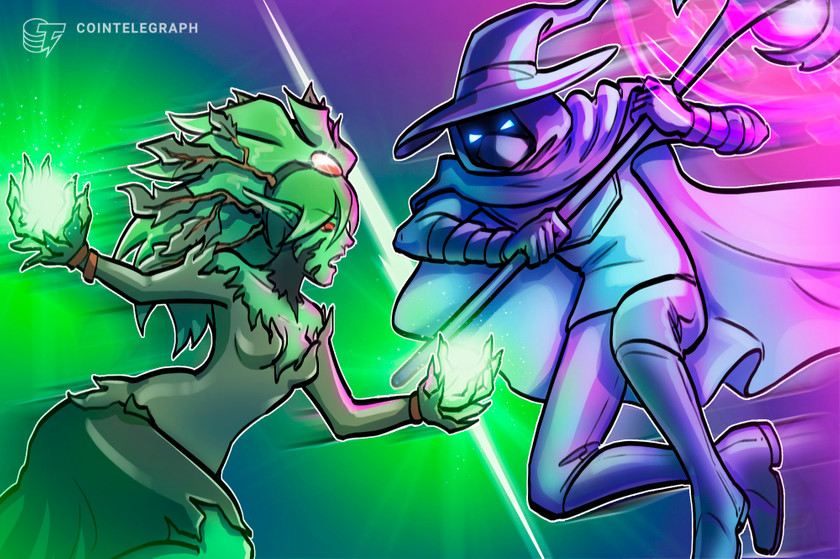
Discover the exciting world of Splinterlands, a P2E collectible card game featuring unique NFTs, strategic battles and player-driven markets.

The development of blockchain technology and the growing adoption of nonfungible tokens (NFTs) are two factors that have contributed to the proliferation of play-to-earn collectible games. Play-to-earn (P2E) games allow players to gain benefits by participating in the game, such as in-game currency and items.

This creates a new dynamic where players can profit from their in-game actions, enhancing the fun and purpose of the gaming experience. Additionally, the usage of NFTs and blockchain technology in play-to-earn games gives players greater ownership and scarcity, which increases demand and can result in higher prices for exclusive in-game commodities. Play-to-earn games like Splinterlands are thus attracting a wider audience of players and investors.
Related articles

Binance’s $6.5B court order gets served on the blockchain itself

Binance’s $6.5B court order gets served on the blockchain itself

November 22, 2026
Sonic audit finds S token supply 48% above announced 3.175 billion

Sonic audit finds S token supply 48% above announced 3.175 billion

November 21, 2026

This article will explain what makes Splinterlands unique, how to play it, how to earn money playing Splinterlands and the future prospects of the free-to-play NFT card game.

What is Splinterlands?

Splinterlands is a decentralized, blockchain-based game built on top of the Steem blockchain. Splinterlands is developed and maintained by a team led by its CEO and creator, Jonathan Barnard. The team is based in the United States and works on the development and growth of the game and its community.

The game has many distinct cards, each with special skills and traits. There are two types of cards in Splinterlands: Summoners and Monsters, which may be found in Splinterlands Booster Packs.

Types of Cards

Unique digital cards stored on the blockchain can be bought, collected, traded and used in battle by players. In a turn-based game with a fantasy theme, players can construct decks using their collection of cards and engage in combat with other players. Additionally, the game features a tournament system where players can compete for incentives and prizes.

In-game cards and items in Splinterlands can be purchased using the STEEM cryptocurrency, with the game’s native token, Dark Energy Crystals (DEC), earned by playing or bought and used as an in-game currency.

How does Splinterlands work?

Blockchain technology powers the digital collectible card game Splinterlands, which uses NFTs to represent its in-game assets, including cards, game items and other virtual assets. As a result, the game’s transactions and the cards’ ownership are tracked on a distributed ledger, increasing their transparency and security.

Players can obtain cards through purchases made in-game, opening booster packs, or winning them in competitions. Fire, Water, Earth, Dragon, Life, and Death, also called splinters, are six sources of magic in the Splinterlands. A distinct fantasy creature with various stats and abilities appears on each card. Players can use these cards to create decks that they can use to compete against other players in games.

Splinters in the Splinterlands game

In Splinterlands, strategy and chance are combined to create the gameplay. Each player uses mana crystals, in turn, to cast spells and summon creatures that they can use to both attack and defend against their foes.

Each game is distinct and unpredictable since it is determined by a set of rules and a series of random events. By winning games and participating in competitions, players can earn rewards in the form of in-game currency and new cards.

Players can gain rewards in addition to casual and competitive play by participating in daily missions and competitions and holding particular cards. A marketplace is another game feature where players may purchase and sell cards. Overall, Splinterlands is a fun and interesting game that gives players a sense of ownership and replayability.

What is STEEM used for?

STEEM is the native cryptocurrency of the Steem blockchain — a decentralized social media platform that rewards users for creating and curating content. Users that create, curate and comment on the content are rewarded with STEEM on the Steem blockchain, which uses a proof-of-stake consensus method.

Users can also earn additional rewards through Steem Power, a token that gives users more influence on the platform and a share of the rewards distributed to content creators. Users can also earn Steem Dollars, a stablecoin pegged to the value of the U.S. dollar. Furthermore, players can use STEEM to buy in-game items in the Splinterlands game and other products and services on the Steem blockchain.

How to play Splinterlands?

The steps to playing Splinterlands include the following:

  • Create an account: To play Splinterlands; one must register for a Steem account. Users can accomplish this by registering on Steemit, a platform that enables people to create accounts and engage with the blockchain.
  • Buy cards: After creating an account, one can use STEEM to buy cards from the in-game shop. Users can also acquire cards by participating in tournaments and other activities.
  • Create a deck: After acquiring a set of cards, users can choose the cards they want to employ in combat. It is crucial to select a balance of cards that will operate well together because each card has a different set of powers and traits.
  • Battle: Users can begin combat with other players after their deck is prepared. Battles take place on a virtual battlefield and are turn-based. Since each card has unique abilities and traits, applying strategy to outwit your adversary is critical.
  • Leagues and competitions: Splinterlands hosts several ongoing leagues, competitions and events. Players can improve their ratings and win incentives and prizes by participating in them.
  • Monster cards: Players can level up their monster cards in Splinterlands by using potions and utilizing them in combat. One’s monster card gets more potent the higher its level.

Users can download the game from the official website and play it on their PCs and mobile devices. Although it is free to play, players can use cryptocurrencies to buy in-game items and cards.

How to earn money with Splinterlands?

Splinterlands has several ways to earn money. Some of these ways include: 

  • Playing and winning tournaments: Players can participate in tournaments and win cash prizes. 
  • Selling cards: Players can buy and sell cards on the secondary market, such as on the Splinterlands website or other online marketplaces.
  • Creating and selling custom card designs: Players can create custom designs for cards and sell them to other players.
  • Leasing cards: Players can lease their powerful cards to other players for a fee.
  • Staking: Players can stake their tokens to help secure the network and earn a return on their investment.

Nevertheless, it is important to note that the value of the in-game assets can fluctuate and there is no guarantee of earning money playing Splinterlands. That said, users should always do their own research and invest what they can afford to lose.

Where to buy STEEM cryptocurrency?

STEEM can be purchased on cryptocurrency exchanges such as Binance, Huobi Global, Upbit and Bittrex. Additionally, decentralized exchanges (DEXs) like Steem Engine and Steem Dex allow users to purchase STEEM. 

Additionally, it is vital to keep in mind that some exchanges might not allow purchases of STEEM made with fiat money and instead require the use of a cryptocurrency like Bitcoin (BTC) or Ether (ETH) to make the purchase.

Here are the general steps to buy STEEM cryptocurrency:

  • First, users will need to create an account on a cryptocurrency exchange that supports the purchase of STEEM, such as Binance, Huobi Global, Upbit and Bittrex.
  • Next, they must verify their identity by providing personal information and proof of identity. This is a requirement for most exchanges to comply with Anti-Money Laundering and Know Your Customer regulations.
  • Once a user’s account is verified, they need to add a payment method. This can typically be done by linking a bank account or credit/debit card. Some exchanges also allow users to deposit cryptocurrency like BTC or ETH to buy STEEM.
  • Once a user has added a payment method, they can place an order to buy STEEM. One can typically choose between a market order, which will buy STEEM at the prevailing market price, or a limit order, which allows them to set a specific price at which they want to buy STEEM.
  • After filling the order, the STEEM will be credited to a user’s exchange account. They can then withdraw the STEEM to a wallet that supports its storage.

Related: Crypto trading basics: A beginner’s guide to cryptocurrency order types

However, certain exchanges may differ from the steps mentioned above; therefore, studying the exchange’s unique instructions and fees before registering and conducting any trades is crucial.

What is minting in Splinterlands?

Minting in the context of Splinterlands refers to the process of creating new cards and adding them to the game. Here’s an overview of the process:

  • Users must first buy a summoner — a card that enables the creation of new cards. These are either obtainable through gameplay or may be purchased in the Splinterlands market.
  • Users who own summoners can use them to create new cards. This is accomplished by “summoning” fresh cards via the summoner. Each summoner has a specific set of rules for how many and how often cards can be minted.
  • Players can add the newly created card to their collection, use it in gaming, or sell it on the market after using the summoner to create it.

However, the Splinterlands game and market are constantly evolving; therefore, the method of producing new cards can change. Users should always check the Splinterlands website or community for the most recent information.

Is it worth investing in Splinterlands?

The game’s popularity and the value of its cards have been growing since its launch in 2019, with a thriving player and collector base. Moreover, deciding to invest in Splinterlands depends on market conditions and project performance, just like any other investment.

Numerous factors, including game updates and general trends in the gaming and cryptocurrency sectors, can impact the value of cards and the game’s popularity. However, buying any cryptocurrency, including Splinterlands, can be risky, so one should conduct their own research and carefully assess their risk tolerance before making a purchase.

The future of P2E collectible card games

The future of play-to-earn collectible card games is uncertain, but it is expected that they may continue growing in popularity. These games give players the thrill of creating and collecting one-of-a-kind virtual cards and the chance to get real-world value from in-game objects.

Play-to-earn crypto games may also be seen as an investment, where players can acquire valuable in-game items and sell them for real money. Furthermore, advancements in blockchain technology may open the door to play-to-earn experiences that are even safer and more transparent, along with the possibility of interoperability between various games.

However, other elements, such as player interest, competition from other gaming genres and the regulatory environment, will impact how well play-to-earn collectible card games perform. Therefore, it is necessary to monitor market trends and new technological developments before making investment decisions.

Read Entire Article
Tags: CointelegraphCryptocurrencyInvestmentMining Bitcoin
Share76Tweet47

Related Posts

Binance’s $6.5B court order gets served on the blockchain itself

Binance’s $6.5B court order gets served on the blockchain itself

by Jon Hartney
November 22, 2026
0

Binance obtained a $65 billion worldwide freezing order from ADGM Courts, with notices served on-chain to about 26,000 wallet addresses

Sonic audit finds S token supply 48% above announced 3.175 billion

Sonic audit finds S token supply 48% above announced 3.175 billion

by Jon Hartney
November 21, 2026
0

An independent audit found Sonic's S token supply is 470 billion, 48% above the 3175 billion announced at launch Sonic...

HTX Research Publishes Six-Month Outlook for Bitcoin and Crypto Markets

HTX Research Publishes Six-Month Outlook for Bitcoin and Crypto Markets

by Jon Hartney
November 20, 2026
0

Apia, Samoa, November 20, 2026 – HTX Research, the dedicated research arm of HTX, has published a new report titled...

As traditional giants rush into digital dollars, USDD’s Yvonne Chia explains why 24/7 access, self-custody, and transparent yield give decentralized stablecoins an edge banks can’t replicate. 20 November – Road Town, Totorla, British Virgin Islands – Decentralized stablecoin protocol USDD is accelerating its multichain utility across TRON, Ethereum, and BNB Chain—combining automated sUSDD yield via its Smart Allocator with GasFree zero-TRX transfers—as traditional financial giants race to build competing stablecoin rails.  In a recent industry interview with instant exchange partner ChangeNOW, USDD Head of Communications Yvonne Chia outlined why self-custody, 24/7 settlement, and transparent onchain reserves give decentralized digital dollars a structural advantage over bank-issued alternatives. 1. Permissionless Access vs. Gatekept Accounts For billions of people globally, opening and maintaining a traditional bank account still involves paperwork, minimum balance requirements, geographic restrictions, and approval delays. Even when banks integrate stablecoin rails behind the scenes, those services remain gated behind legacy compliance walls and intermediary control. Crypto-native stablecoins flip that model on its head. As Yvonne Chia highlighted during the interview: “Compare this to a stablecoin like USDD, where all you need is a phone, a working internet connection, you can immediately start a wallet and you have access to your funds right away.” With USDD, users can access and manage their digital dollars directly through their own wallets, without depending on traditional financial intermediaries.  This represents a fundamental shift in financial access: users are no longer limited to the services, operating hours, or account structures of a single institution. Instead, they have the freedom to hold, manage, and transfer their assets on their own terms. Self-custody also gives users greater autonomy over their financial decisions. They can choose which wallets to use, where to transfer their assets, and which supported decentralized applications to interact with, without needing to route every transaction through a centralized financial institution.  With USDD, users’ digital dollars can move with them across an open blockchain ecosystem, rather than remaining tied to a particular bank or service provider. 2. 24/7 Global Settlement vs. “Banking Hours” Legacy payment networks still operate on decades-old schedules: weekend cutoffs, bank holidays, and multi-day cross-border settlement delays accompanied by hefty wire fees. Blockchain networks never close. Whether it is a Sunday night or a public holiday, USDD moves globally without depending on traditional banking operating hours or settlement windows. “We are able to have transfers 24/7 and we’re not limited to any traditional banking hours. So I think that in some ways, stablecoins are not just becoming banks, but exceeding what traditional banks can offer to users.” To make everyday transfers even smoother than fintech apps, USDD introduced GasFree integration on TRON, allowing users on supported wallets to pay network fees directly in USDD without needing to hold TRX. This removes another practical barrier to stablecoin adoption: having to acquire and maintain a separate gas token just to transfer digital dollars. With GasFree, eligible users can pay approximately 0.5 USDD per transaction, compared with around 1.5 USDT for a standard USDT transfer under the referenced fee conditions. These improvements matter because the usefulness of a stablecoin is not determined by its peg alone. Low-cost transfers, straightforward wallet experiences, and around-the-clock availability are what make digital dollars practical for everyday payments and global value transfers. 3. Passing Yield Back to Users vs. Bank Spreads Perhaps the sharpest contrast between banks and decentralized stablecoins lies in how yield is distributed.  In traditional banking, institutions take customer deposits, deploy them into yield-generating markets, and retain a significant portion of the returns. Everyday depositors may receive relatively low interest rates, while higher-yielding products often come with eligibility requirements, minimum deposits, or fixed maturity periods. Stablecoins introduce another way to participate in digital-dollar opportunities. Rather than keeping capital entirely within a traditional deposit account, users can access onchain yield opportunities through decentralized protocols and transparent investment mechanisms. USDD was built to return that value directly to holders. Through USDD Earn, users can deposit USDD to receive sUSDD, earning automated, competitive yield powered by our Smart Allocator system, with no fixed lock-up periods restricting access to their capital. For users, the distinction is important: USDD Earn provides access to a productive stablecoin while maintaining flexibility, rather than requiring users to commit their capital to a conventional fixed-term product. 4. Onchain Verification vs. Institutional Trust Traditional banks ask customers to trust closed-door balance sheets and periodic regulatory filings—until a crisis proves otherwise.  USDD takes a different approach through its “Don’t trust, verify” ethos, emphasizing publicly accessible onchain information and independent verification. Onchain Transparency: Smart contract addresses, collateral reserves, and Smart Allocator deployments are publicly viewable, allowing users to examine relevant information directly on the blockchain. Structured Disclosures: Quarterly Treasury Reports provide additional information about reserve positions, financial performance, and operational developments. Independent Security Reviews: USDD undergoes third-party security audits to assess its smart contracts and identify potential vulnerabilities. Transparency does not eliminate financial or technical risks, but it changes how users can evaluate them. Instead of relying exclusively on an institution’s assurances, users have access to information that can be independently examined and verified. 5. Beyond a Single Network: An Open, Multichain Financial Ecosystem Financial freedom is not just about holding digital dollars. It is also about being able to use them wherever opportunities and applications exist. A stablecoin confined to a single network or limited use case cannot fully realize the potential of open blockchain finance. Following its January 2025 protocol upgrade, USDD expanded natively from TRON onto Ethereum and BNB Chain, extending its reach across multiple blockchain ecosystems. This multichain presence allows USDD to connect with different communities, liquidity environments, and decentralized applications. Its sUSDD product has also expanded into DeFi integrations, including Pendle and Morpho, giving users additional ways to access yield strategies across supported ecosystems. The bigger picture is an interconnected financial ecosystem in which users can move between holding, transferring, exchanging, and deploying their stablecoins according to their own needs. These are not isolated functions. Together, they make stablecoins more useful as everyday financial infrastructure. The Future: Interconnected, Open, and Multichain Banks will undoubtedly continue using stablecoin rails to modernize their back-end settlement. However, true financial freedom comes from open networks where assets flow freely across protocols without intermediaries. For USDD, the opportunity goes beyond offering a dollar-pegged asset. It is about making digital dollars accessible, transferable, and productive across an interconnected financial ecosystem. From self-custody and 24/7 transfers to flexible yield opportunities and multichain DeFi access, these capabilities give users more ways to put their money to work. Banks may be bringing stablecoins into traditional finance. Crypto-native protocols are showing what stablecoins can make possible beyond it.

As traditional giants rush into digital dollars, USDD’s Yvonne Chia explains why 24/7 access, self-custody, and transparent yield give decentralized stablecoins an edge banks can’t replicate. 20 November – Road Town, Totorla, British Virgin Islands – Decentralized stablecoin protocol USDD is accelerating its multichain utility across TRON, Ethereum, and BNB Chain—combining automated sUSDD yield via its Smart Allocator with GasFree zero-TRX transfers—as traditional financial giants race to build competing stablecoin rails. In a recent industry interview with instant exchange partner ChangeNOW, USDD Head of Communications Yvonne Chia outlined why self-custody, 24/7 settlement, and transparent onchain reserves give decentralized digital dollars a structural advantage over bank-issued alternatives. 1. Permissionless Access vs. Gatekept Accounts For billions of people globally, opening and maintaining a traditional bank account still involves paperwork, minimum balance requirements, geographic restrictions, and approval delays. Even when banks integrate stablecoin rails behind the scenes, those services remain gated behind legacy compliance walls and intermediary control. Crypto-native stablecoins flip that model on its head. As Yvonne Chia highlighted during the interview: “Compare this to a stablecoin like USDD, where all you need is a phone, a working internet connection, you can immediately start a wallet and you have access to your funds right away.” With USDD, users can access and manage their digital dollars directly through their own wallets, without depending on traditional financial intermediaries. This represents a fundamental shift in financial access: users are no longer limited to the services, operating hours, or account structures of a single institution. Instead, they have the freedom to hold, manage, and transfer their assets on their own terms. Self-custody also gives users greater autonomy over their financial decisions. They can choose which wallets to use, where to transfer their assets, and which supported decentralized applications to interact with, without needing to route every transaction through a centralized financial institution. With USDD, users’ digital dollars can move with them across an open blockchain ecosystem, rather than remaining tied to a particular bank or service provider. 2. 24/7 Global Settlement vs. “Banking Hours” Legacy payment networks still operate on decades-old schedules: weekend cutoffs, bank holidays, and multi-day cross-border settlement delays accompanied by hefty wire fees. Blockchain networks never close. Whether it is a Sunday night or a public holiday, USDD moves globally without depending on traditional banking operating hours or settlement windows. “We are able to have transfers 24/7 and we’re not limited to any traditional banking hours. So I think that in some ways, stablecoins are not just becoming banks, but exceeding what traditional banks can offer to users.” To make everyday transfers even smoother than fintech apps, USDD introduced GasFree integration on TRON, allowing users on supported wallets to pay network fees directly in USDD without needing to hold TRX. This removes another practical barrier to stablecoin adoption: having to acquire and maintain a separate gas token just to transfer digital dollars. With GasFree, eligible users can pay approximately 0.5 USDD per transaction, compared with around 1.5 USDT for a standard USDT transfer under the referenced fee conditions. These improvements matter because the usefulness of a stablecoin is not determined by its peg alone. Low-cost transfers, straightforward wallet experiences, and around-the-clock availability are what make digital dollars practical for everyday payments and global value transfers. 3. Passing Yield Back to Users vs. Bank Spreads Perhaps the sharpest contrast between banks and decentralized stablecoins lies in how yield is distributed. In traditional banking, institutions take customer deposits, deploy them into yield-generating markets, and retain a significant portion of the returns. Everyday depositors may receive relatively low interest rates, while higher-yielding products often come with eligibility requirements, minimum deposits, or fixed maturity periods. Stablecoins introduce another way to participate in digital-dollar opportunities. Rather than keeping capital entirely within a traditional deposit account, users can access onchain yield opportunities through decentralized protocols and transparent investment mechanisms. USDD was built to return that value directly to holders. Through USDD Earn, users can deposit USDD to receive sUSDD, earning automated, competitive yield powered by our Smart Allocator system, with no fixed lock-up periods restricting access to their capital. For users, the distinction is important: USDD Earn provides access to a productive stablecoin while maintaining flexibility, rather than requiring users to commit their capital to a conventional fixed-term product. 4. Onchain Verification vs. Institutional Trust Traditional banks ask customers to trust closed-door balance sheets and periodic regulatory filings—until a crisis proves otherwise. USDD takes a different approach through its “Don’t trust, verify” ethos, emphasizing publicly accessible onchain information and independent verification. Onchain Transparency: Smart contract addresses, collateral reserves, and Smart Allocator deployments are publicly viewable, allowing users to examine relevant information directly on the blockchain. Structured Disclosures: Quarterly Treasury Reports provide additional information about reserve positions, financial performance, and operational developments. Independent Security Reviews: USDD undergoes third-party security audits to assess its smart contracts and identify potential vulnerabilities. Transparency does not eliminate financial or technical risks, but it changes how users can evaluate them. Instead of relying exclusively on an institution’s assurances, users have access to information that can be independently examined and verified. 5. Beyond a Single Network: An Open, Multichain Financial Ecosystem Financial freedom is not just about holding digital dollars. It is also about being able to use them wherever opportunities and applications exist. A stablecoin confined to a single network or limited use case cannot fully realize the potential of open blockchain finance. Following its January 2025 protocol upgrade, USDD expanded natively from TRON onto Ethereum and BNB Chain, extending its reach across multiple blockchain ecosystems. This multichain presence allows USDD to connect with different communities, liquidity environments, and decentralized applications. Its sUSDD product has also expanded into DeFi integrations, including Pendle and Morpho, giving users additional ways to access yield strategies across supported ecosystems. The bigger picture is an interconnected financial ecosystem in which users can move between holding, transferring, exchanging, and deploying their stablecoins according to their own needs. These are not isolated functions. Together, they make stablecoins more useful as everyday financial infrastructure. The Future: Interconnected, Open, and Multichain Banks will undoubtedly continue using stablecoin rails to modernize their back-end settlement. However, true financial freedom comes from open networks where assets flow freely across protocols without intermediaries. For USDD, the opportunity goes beyond offering a dollar-pegged asset. It is about making digital dollars accessible, transferable, and productive across an interconnected financial ecosystem. From self-custody and 24/7 transfers to flexible yield opportunities and multichain DeFi access, these capabilities give users more ways to put their money to work. Banks may be bringing stablecoins into traditional finance. Crypto-native protocols are showing what stablecoins can make possible beyond it.

by Jon Hartney
November 20, 2026
0

As traditional giants rush into digital dollars, USDD’s Yvonne Chia explains why 24/7 access, self-custody, and transparent yield give decentralized...

Banks Are Adopting Stablecoins: Here Is Why Crypto-Native Dollars Still Win on User Freedom

Banks Are Adopting Stablecoins: Here Is Why Crypto-Native Dollars Still Win on User Freedom

by Jon Hartney
November 20, 2026
0

As traditional giants rush into digital dollars, USDD’s Yvonne Chia explains why 24/7 access, self-custody, and transparent yield give decentralized...

Load More
  • Trending
  • Comments
  • Latest
Crypto, Fintech push back against banks’ war on open banking

Crypto, Fintech push back against banks’ war on open banking

October 21, 2025
Bitcoin Cash (BCH) Pulls Back After Yesterday’s Big Push While Ecoterra Goes Up and Up

Bitcoin Cash (BCH) Pulls Back After Yesterday’s Big Push While Ecoterra Goes Up and Up

July 1, 2023
Bitcoin ETFs shed $1.2B in red week, but Schwab remains bullish

Bitcoin ETFs shed $1.2B in red week, but Schwab remains bullish

October 18, 2025
SUI Price Hits All-Time High – But Questions About Valuation Remain

SUI Price Hits All-Time High – But Questions About Valuation Remain

October 17, 2024
All aboard! Elon Musk’s Vegas Loop now taking Dogecoin payments

All aboard! Elon Musk’s Vegas Loop now taking Dogecoin payments

0
Crypto owners banned from working on US Government crypto policies

Crypto owners banned from working on US Government crypto policies

0
Korean startup Uprise lost $20M shorting LUNC

Korean startup Uprise lost $20M shorting LUNC

0
Ethereum testnet Merge mostly successful — ‘Hiccups will not delay the Merge.’

Ethereum testnet Merge mostly successful — ‘Hiccups will not delay the Merge.’

0
Binance’s $6.5B court order gets served on the blockchain itself

Binance’s $6.5B court order gets served on the blockchain itself

November 22, 2026
Sonic audit finds S token supply 48% above announced 3.175 billion

Sonic audit finds S token supply 48% above announced 3.175 billion

November 21, 2026
HTX Research Publishes Six-Month Outlook for Bitcoin and Crypto Markets

HTX Research Publishes Six-Month Outlook for Bitcoin and Crypto Markets

November 20, 2026
Banks Are Adopting Stablecoins: Here Is Why Crypto-Native Dollars Still Win on User Freedom

Banks Are Adopting Stablecoins: Here Is Why Crypto-Native Dollars Still Win on User Freedom

November 20, 2026

XBT.Market

This website is an automated news feed powered by the Nebulome cloud system. The site is made possible by YYC TECH Consulting and Alberta Digital Mining Company. As a team with major crypto and bitcoin enthusiasm, we have curated major sources of news, trading and financial data to bring you, our viewer, an unbiased source of truth.

Recent Posts

  • Binance’s $6.5B court order gets served on the blockchain itself November 22, 2026
  • Sonic audit finds S token supply 48% above announced 3.175 billion November 21, 2026
  • HTX Research Publishes Six-Month Outlook for Bitcoin and Crypto Markets November 20, 2026
  • Banks Are Adopting Stablecoins: Here Is Why Crypto-Native Dollars Still Win on User Freedom November 20, 2026
  • As traditional giants rush into digital dollars, USDD’s Yvonne Chia explains why 24/7 access, self-custody, and transparent yield give decentralized stablecoins an edge banks can’t replicate. 20 November – Road Town, Totorla, British Virgin Islands – Decentralized stablecoin protocol USDD is accelerating its multichain utility across TRON, Ethereum, and BNB Chain—combining automated sUSDD yield via its Smart Allocator with GasFree zero-TRX transfers—as traditional financial giants race to build competing stablecoin rails. In a recent industry interview with instant exchange partner ChangeNOW, USDD Head of Communications Yvonne Chia outlined why self-custody, 24/7 settlement, and transparent onchain reserves give decentralized digital dollars a structural advantage over bank-issued alternatives. 1. Permissionless Access vs. Gatekept Accounts For billions of people globally, opening and maintaining a traditional bank account still involves paperwork, minimum balance requirements, geographic restrictions, and approval delays. Even when banks integrate stablecoin rails behind the scenes, those services remain gated behind legacy compliance walls and intermediary control. Crypto-native stablecoins flip that model on its head. As Yvonne Chia highlighted during the interview: “Compare this to a stablecoin like USDD, where all you need is a phone, a working internet connection, you can immediately start a wallet and you have access to your funds right away.” With USDD, users can access and manage their digital dollars directly through their own wallets, without depending on traditional financial intermediaries. This represents a fundamental shift in financial access: users are no longer limited to the services, operating hours, or account structures of a single institution. Instead, they have the freedom to hold, manage, and transfer their assets on their own terms. Self-custody also gives users greater autonomy over their financial decisions. They can choose which wallets to use, where to transfer their assets, and which supported decentralized applications to interact with, without needing to route every transaction through a centralized financial institution. With USDD, users’ digital dollars can move with them across an open blockchain ecosystem, rather than remaining tied to a particular bank or service provider. 2. 24/7 Global Settlement vs. “Banking Hours” Legacy payment networks still operate on decades-old schedules: weekend cutoffs, bank holidays, and multi-day cross-border settlement delays accompanied by hefty wire fees. Blockchain networks never close. Whether it is a Sunday night or a public holiday, USDD moves globally without depending on traditional banking operating hours or settlement windows. “We are able to have transfers 24/7 and we’re not limited to any traditional banking hours. So I think that in some ways, stablecoins are not just becoming banks, but exceeding what traditional banks can offer to users.” To make everyday transfers even smoother than fintech apps, USDD introduced GasFree integration on TRON, allowing users on supported wallets to pay network fees directly in USDD without needing to hold TRX. This removes another practical barrier to stablecoin adoption: having to acquire and maintain a separate gas token just to transfer digital dollars. With GasFree, eligible users can pay approximately 0.5 USDD per transaction, compared with around 1.5 USDT for a standard USDT transfer under the referenced fee conditions. These improvements matter because the usefulness of a stablecoin is not determined by its peg alone. Low-cost transfers, straightforward wallet experiences, and around-the-clock availability are what make digital dollars practical for everyday payments and global value transfers. 3. Passing Yield Back to Users vs. Bank Spreads Perhaps the sharpest contrast between banks and decentralized stablecoins lies in how yield is distributed. In traditional banking, institutions take customer deposits, deploy them into yield-generating markets, and retain a significant portion of the returns. Everyday depositors may receive relatively low interest rates, while higher-yielding products often come with eligibility requirements, minimum deposits, or fixed maturity periods. Stablecoins introduce another way to participate in digital-dollar opportunities. Rather than keeping capital entirely within a traditional deposit account, users can access onchain yield opportunities through decentralized protocols and transparent investment mechanisms. USDD was built to return that value directly to holders. Through USDD Earn, users can deposit USDD to receive sUSDD, earning automated, competitive yield powered by our Smart Allocator system, with no fixed lock-up periods restricting access to their capital. For users, the distinction is important: USDD Earn provides access to a productive stablecoin while maintaining flexibility, rather than requiring users to commit their capital to a conventional fixed-term product. 4. Onchain Verification vs. Institutional Trust Traditional banks ask customers to trust closed-door balance sheets and periodic regulatory filings—until a crisis proves otherwise. USDD takes a different approach through its “Don’t trust, verify” ethos, emphasizing publicly accessible onchain information and independent verification. Onchain Transparency: Smart contract addresses, collateral reserves, and Smart Allocator deployments are publicly viewable, allowing users to examine relevant information directly on the blockchain. Structured Disclosures: Quarterly Treasury Reports provide additional information about reserve positions, financial performance, and operational developments. Independent Security Reviews: USDD undergoes third-party security audits to assess its smart contracts and identify potential vulnerabilities. Transparency does not eliminate financial or technical risks, but it changes how users can evaluate them. Instead of relying exclusively on an institution’s assurances, users have access to information that can be independently examined and verified. 5. Beyond a Single Network: An Open, Multichain Financial Ecosystem Financial freedom is not just about holding digital dollars. It is also about being able to use them wherever opportunities and applications exist. A stablecoin confined to a single network or limited use case cannot fully realize the potential of open blockchain finance. Following its January 2025 protocol upgrade, USDD expanded natively from TRON onto Ethereum and BNB Chain, extending its reach across multiple blockchain ecosystems. This multichain presence allows USDD to connect with different communities, liquidity environments, and decentralized applications. Its sUSDD product has also expanded into DeFi integrations, including Pendle and Morpho, giving users additional ways to access yield strategies across supported ecosystems. The bigger picture is an interconnected financial ecosystem in which users can move between holding, transferring, exchanging, and deploying their stablecoins according to their own needs. These are not isolated functions. Together, they make stablecoins more useful as everyday financial infrastructure. The Future: Interconnected, Open, and Multichain Banks will undoubtedly continue using stablecoin rails to modernize their back-end settlement. However, true financial freedom comes from open networks where assets flow freely across protocols without intermediaries. For USDD, the opportunity goes beyond offering a dollar-pegged asset. It is about making digital dollars accessible, transferable, and productive across an interconnected financial ecosystem. From self-custody and 24/7 transfers to flexible yield opportunities and multichain DeFi access, these capabilities give users more ways to put their money to work. Banks may be bringing stablecoins into traditional finance. Crypto-native protocols are showing what stablecoins can make possible beyond it. November 20, 2026


News Categories

  • Bitcoin
  • Blockchain
  • Business
  • Market
  • Uncategorized

Tags

bitcoinMagzine Cointelegraph Cryptocurrency insidebitcoins Investment Mining Bitcoin NewsBTC

Quicklinks

  • Home
  • Coins MarketCap
  • Crypto Exchanges
  • Crypto Calculator
  • Top Gainers and Loser
  • News
  • Contact Us

© 2022 Xbt.Market - Powered by YYC Tech Consulting & ADMCO.

No Result
View All Result
  • Home
  • Coins MarketCap
  • Crypto Exchanges
  • Crypto Calculator
  • Top Gainers and Loser
  • News
  • Contact Us

© 2022 Xbt.Market by Nebulome.

  • Steakhouse EURCV Morpho VaultSteakhouse EURCV Morpho Vault(STEAKEURCV)$0.000000-100.00%
  • FibSwap DEXFibSwap DEX(FIBO)$0.0084659.90%
  • TruFin Staked APTTruFin Staked APT(TRUAPT)$8.020.00%
  • bitcoinBitcoin(BTC)$84,372.003.58%
  • ethereumEthereum(ETH)$1,885.365.68%
  • tetherTether(USDT)$1.000.00%
  • rippleXRP(XRP)$2.186.84%
  • USDEXUSDEX(USDEX)$1.07-0.53%
  • binancecoinBNB(BNB)$617.995.03%
  • Wrapped SOLWrapped SOL(SOL)$143.66-2.32%
  • solanaSolana(SOL)$128.974.23%
  • usd-coinUSDC(USDC)$1.000.01%
  • dogecoinDogecoin(DOGE)$0.1736117.78%
  • cardanoCardano(ADA)$0.687.61%
  • tronTRON(TRX)$0.2342340.79%
  • staked-etherLido Staked Ether(STETH)$1,884.065.48%
  • Gaj FinanceGaj Finance(GAJ)$0.0059271.46%
  • Content BitcoinContent Bitcoin(CTB)$24.482.55%
  • USD OneUSD One(USD1)$1.000.11%
  • wrapped-bitcoinWrapped Bitcoin(WBTC)$84,309.003.84%
  • ToncoinToncoin(TON)$4.157.66%
  • UGOLD Inc.UGOLD Inc.(UGOLD)$3,042.460.08%
  • ParkcoinParkcoin(KPK)$1.101.76%
  • chainlinkChainlink(LINK)$14.027.76%
  • leo-tokenLEO Token(LEO)$9.211.17%
  • stellarStellar(XLM)$0.2743585.70%
  • avalanche-2Avalanche(AVAX)$19.647.71%
  • Wrapped stETHWrapped stETH(WSTETH)$2,256.395.40%
  • USDSUSDS(USDS)$1.00-0.01%
  • SuiSui(SUI)$2.429.03%
  • shiba-inuShiba Inu(SHIB)$0.0000137.71%
  • hedera-hashgraphHedera(HBAR)$0.17284810.00%
  • Yay StakeStone EtherYay StakeStone Ether(YAYSTONE)$2,671.07-2.84%
  • polkadotPolkadot(DOT)$4.257.34%
  • litecoinLitecoin(LTC)$85.265.04%
  • bitcoin-cashBitcoin Cash(BCH)$314.248.23%
  • mantra-daoMANTRA(OM)$6.301.94%
  • Pundi AIFXPundi AIFX(PUNDIAI)$16.000.00%
  • PengPeng(PENG)$0.60-13.59%
  • Bitget TokenBitget Token(BGB)$4.664.95%
  • wethWETH(WETH)$1,884.285.66%
  • Ethena USDeEthena USDe(USDE)$1.00-0.04%
  • Binance Bridged USDT (BNB Smart Chain)Binance Bridged USDT (BNB Smart Chain)(BSC-USD)$1.00-0.18%
  • MurasakiMurasaki(MURA)$4.23-13.71%
  • Black PhoenixBlack Phoenix(BPX)$3.351,000.00%
  • Pi NetworkPi Network(PI)$0.714.53%
  • HyperliquidHyperliquid(HYPE)$13.729.80%
  • Wrapped eETHWrapped eETH(WEETH)$2,003.675.53%
  • WhiteBIT CoinWhiteBIT Coin(WBT)$28.350.76%
  • moneroMonero(XMR)$217.841.31%
  • Zypto TokenZypto Token(ZYPTO)$0.037139-3.47%
  • uniswapUniswap(UNI)$6.217.66%
  • AptosAptos(APT)$5.395.79%
  • PepePepe(PEPE)$0.00000811.37%
  • daiDai(DAI)$1.00-0.01%
  • nearNEAR Protocol(NEAR)$2.635.26%
  • XT.comXT.com(XT)$3.08-1.65%
  • Layer One XLayer One X(L1X)$23.35454.66%
  • sUSDSsUSDS(SUSDS)$1.050.05%
  • okbOKB(OKB)$48.762.12%
  • gatechain-tokenGate(GT)$22.883.58%
  • crypto-com-chainCronos(CRO)$0.1015853.46%
  • Coinbase Wrapped BTCCoinbase Wrapped BTC(CBBTC)$84,342.003.68%
  • MantleMantle(MNT)$0.814.44%
  • Tokenize XchangeTokenize Xchange(TKX)$33.460.86%
  • internet-computerInternet Computer(ICP)$5.517.85%
  • ethereum-classicEthereum Classic(ETC)$17.074.81%
  • OndoOndo(ONDO)$0.817.47%
  • First Digital USDFirst Digital USD(FDUSD)$1.00-0.12%
  • aaveAave(AAVE)$168.6110.19%
  • Aerarium FiAerarium Fi(AERA)$7.14-13.11%
  • Ethena Staked USDeEthena Staked USDe(SUSDE)$1.170.30%
  • BSCEXBSCEX(BSCX)$237.310.49%
  • Official TrumpOfficial Trump(TRUMP)$10.354.36%
  • vechainVeChain(VET)$0.0233636.04%
  • cosmosCosmos Hub(ATOM)$4.538.09%
  • fantomFantom(FTM)$0.70-1.56%
  • BittensorBittensor(TAO)$231.277.72%
  • BlackRock USD Institutional Digital Liquidity FundBlackRock USD Institutional Digital Liquidity Fund(BUIDL)$1.000.00%
  • EthenaEthena(ENA)$0.3616194.37%
  • render-tokenRender(RENDER)$3.6710.91%
  • filecoinFilecoin(FIL)$2.927.72%
  • CelestiaCelestia(TIA)$3.181.75%
  • Black AgnusBlack Agnus(FTW)$0.000183423.46%
  • Lombard Staked BTCLombard Staked BTC(LBTC)$84,465.004.02%
  • POL (ex-MATIC)POL (ex-MATIC)(POL)$0.2063993.13%
  • KaspaKaspa(KAS)$0.0682239.38%
  • STAUSTAU(STAU)$0.17397910.95%
  • FasttokenFasttoken(FTN)$4.020.01%
  • Sonic (prev. FTM)Sonic (prev. FTM)(S)$0.5212.98%
  • algorandAlgorand(ALGO)$0.1896979.65%
  • ORA CoinORA Coin(ORA)$4.885.92%
  • ArbitrumArbitrum(ARB)$0.3397526.22%
  • Arbitrum Bridged USDT (Arbitrum)Arbitrum Bridged USDT (Arbitrum)(USDT)$1.000.07%
  • GGTKNGGTKN(GGTKN)$0.1121180.75%
  • kucoin-sharesKuCoin(KCS)$11.231.19%
  • Solv Protocol SolvBTCSolv Protocol SolvBTC(SOLVBTC)$84,076.003.32%
  • fetch-aiArtificial Superintelligence Alliance(FET)$0.4856098.68%
  • optimismOptimism(OP)$0.776.43%
  • StoryStory(IP)$4.75-2.68%