
Enabling the regular usage of bitcoin is the most important step to bringing bitcoin adoption to remote places that need sound money.
This is an opinion editorial by Kudzai Kutukwa, a passionate financial inclusion advocate who was recognized by Fast Company magazine as one of South Africa’s top-20 young entrepreneurs under 30.
There is a battle going on in the world today that is largely hidden from the general public’s view. This is not a battle between nation-states, ethnic groups or religious fanatics fighting over resources and territories. Two monetary systems are on a collision course, each with its own distinct ideology and values. One system is a tool for financial enslavement, and the other, for financial freedom. It’s a battle that not only requires our attention, but our active participation. It’s the battle for the future of money: bitcoin versus fiat.
Over the last two years, we witnessed the biggest encroachment on our freedoms by The State on a global scale. Medical martial law was unleashed on the world which crushed businesses and destroyed livelihoods; the keyboard thought police in the form of “fact-checkers” were deployed to enforce the state’s sole narrative of events with alternative perspectives being labeled “dangerous misinformation” and censored. Millions more were coerced into taking the COVID-19 vaccine because their livelihoods were on the line, while completely disregarding their individual risk profile, religious beliefs and personal preferences.
The media cheered on these gross human rights violations and gaslit everyone while chanting popular slogans like “we’re all in this together” and “it’s just 15 days to slow the spread.” In other words, take one for the team. Those that dared to protest against these draconian measures like the Canadian truckers did, had their bank accounts frozen at the drop of a hat and became victims of financial censorship.
The state overreach I outlined above was enabled by the power of the money printer. The effects of which have now come to haunt the global economy. The U.S. government, for example, spent a total of $5.2 trillion on COVID-19 relief by mid-2021. To put this in perspective, the U.S. government coughed up the equivalent of $4.7 trillion in today’s dollars to fund the most expensive war in history, World War II. Soaring inflation, broken supply chains, ever-increasing interest rates, increases in unemployment, looming sovereign debt crises, the European energy crisis, accelerated currency devaluation and an economic recession are just a few of the consequences brought about by the monetary response to the pandemic, with more to come. The global economy is in such a mess that the U.N. had to plead with central bankers not to hike interest rates! Not only do these events give us greater insight into the destructive nature of the fiat system, but they are a harbinger of things to come should this system remain intact without an alternative.
The world’s central banks are currently engaged in a “global arms race” to roll out central bank digital currencies (CBDCs), with at least 105 countries actively exploring launching a CBDC. CBDCs are the central planners’ way of trying to maintain relevance in the global economy due to the threat posed to fiat currencies by bitcoin and stablecoins. They don’t solve the biggest flaw of fiat currencies; the absolute necessity of governments to engineer growth via monetary inflation. In fact they are actually fiat on steroids. The threat of CBDCs being merged with a Chinese-style social credit system continues to grow and they are an Orwellian form of money because they offer zero privacy, are easier for The State to confiscate and they still get debased — but at a much faster rate due to their programmable nature. CBDCs are surveillance technology masquerading as money, designed to expand The State’s control over our financial lives.
According to a recent paper by the Bitcoin Policy Institute titled, “Why the U.S. Should Reject Central Bank Digital Currencies”:
“Central banks took on unprecedented levels of debt during the COVID-19 pandemic–a crisis that only accelerated the general trend of rising sovereign debt that has been ongoing since the mid-20th century. Global debt-to-GDP ratio had risen to an extraordinary 356% by the end of 2021, with 30% of the increase occurring since 2016. As of mid-2021, rapid increases in sovereign debt had already driven several countries into sovereign default and placed dozens of others on the brink. Even countries that are structurally more solvent because their debt is denominated in their own currencies, like the United States, the United Kingdom, Japan, and China, are concerned about the negative economic effects of ballooning debt…In short, governments need money, fast. As we will see, CBDCs represent an opportunity to extract it from private cash holdings.”
In other words CBDCs would make it possible for The State to conduct financial repression of the highest form at the push of a button by indirectly taxing people’s savings through the setting of negative interest rates on all CBDC balances. This tactic is not new and has also been previously recommended by the IMF in a 2015 paper titled “The Liquidation of Government Debt.” Traditionally, this was done by creating artificial demand for government bonds in order to reduce their yields; the reduced yields paired with a high inflation rate would result in negative real interest rates. The paper clearly outlines this strategy of financial repression in great detail and explicitly recommends it as a good thing despite its damage to people’s savings. Whoever controls your money, controls you, and it’s clear that CBDCs are not just useful for surveillance — they are tools for monetary repression and social engineering.
As currencies weaken and become more unstable, the powers that be usually try to prevent their citizens from dumping the weaker local currency for a stronger one, which ultimately leads to people’s savings being severely devalued. The difference now is the stronger currency is bitcoin; a fact that was recently pointed out in a tweet by Microstrategy Chairman, Michael Saylor where he showed the devaluation of every major world currency against the dollar in the last year, and the dollar’s loss in value against bitcoin. In addition to the CBDC pilot projects, we can already see media campaigns warning about the environmental impact of bitcoin and the gradual roll out of government regulations that are crafted with the intention of dissuading bitcoin ownership and self-custody. Slowly but surely they are trying to block the exits out of the fiat system.
As noted in the opening paragraph, the battle for the future of money is on and the central planners, the gerontocracy, as well as their cantillionaire buddies are going to throw everything at bitcoin to try and stop it. With CBDCs fast approaching, and aggressive attacks being thrown out against Bitcoin, how do we ensure that hyperbitcoinization becomes a reality? While there is no single correct answer to this question, one thing’s for sure: Merely sounding the alarm against the dangers of CBDCs and exposing the fraudulent fiat system is great, but it’s not enough. Informing people of what not to do, doesn’t automatically result in them doing what they should.
My preferred solution to unleashing Bitcoin’s full potential and fostering mass adoption is the building of a parallel economy (AKA a Bitcoin circular economy) that has a bitcoin standard as its foundation, with goods and services being priced in bitcoin. Grass-roots bitcoin communities such as Bitcoin Beach in El Salvador, Bitcoin Ekasi in South Africa, Harlem Bitcoin in New York, Bitcoin Lisboa in Portugal, BTC Beach Camp in Thailand and Bitcoin Lake in Guatemala serve as examples of bottom-up initiatives that can lead to hyperbitcoinization, as was the case with Bitcoin Beach which became one of the catalysts that led to the adoption of bitcoin as legal tender in El Salvador. These communities also serve as the best foundations for building a bitcoin-based parallel economy that will eventually decouple from the U.S. dollar. At its core Bitcoin was designed to be a peer-to-peer monetary system, where “one bitcoin = one bitcoin,” not as a fiat-denominated speculative asset.
In order to accelerate bottom-up grassroots adoption, new user-friendly tools like wallets ought to be built that will make it possible to onboard as many people as possible, particularly in areas where financial exclusion is the norm. An example of such a tool is Machankura, which is an unstructured supplementary service data (USSD)-based custodial wallet that runs on-top of the Lightning Network and doesn’t require an internet connection. While being a custodial service has its disadvantages, the team at Machankura are currently exploring the idea of a non-custodial service that uses SIM cards as a signing device for signing and broadcasting transactions to the rest of the network. Should they manage to pull it off, it would be a significant breakthrough of monumental proportions.
Despite USSD being old technology, 90% of all mobile transactions in Africa today are powered by USSD. This is mainly due to the dominance of feature phones, which constitute 58.3% of Africa’s cellphone market. Given these dynamics, Machankura’s solution of developing a USSD-powered bitcoin wallet is a perfect fit. Presently, Machankura has a footprint in nine African countries, namely South Africa, Zambia, Namibia, Kenya, Tanzania, Uganda, Nigeria, Ghana and Malawi.
The main goal behind the project is to drive financial inclusion through the Bitcoin ecosystem in places with underdeveloped internet infrastructure and/or low smartphone penetration, as is the case in a lot of African countries as well as in most of the Global South. However, despite the low smartphone penetration in Africa, 70% of the $1 trillion worth of mobile money transactions globally were conducted by users in Africa. While research has shown the positive impact of mobile money on developing a savings culture in low income households, the users of these services aren’t shielded from the effects of monetary inflation as their savings will still be denominated in a fiat currency that gradually loses value. Furthemore, mobile money services could potentially be obsoleted once a CBDC is rolled out, or the service providers could be co-opted into being CBDC distributors. As a bitcoin-focused service, Machankura is immune to all of the above.
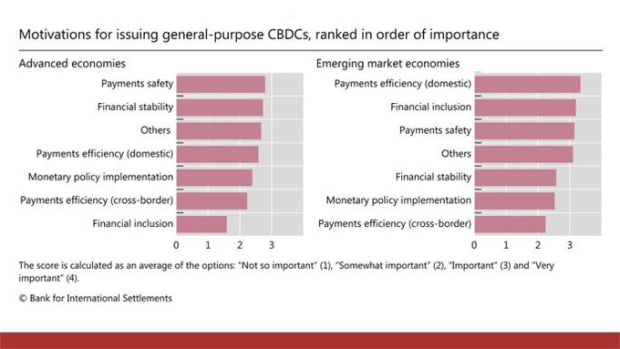
According to the International Labour Organization’s (ILO) estimates, at least two billion people globally are informally employed. In Africa, where at least 57% of adults are unbanked, the informal sector accounts for over 85% of all employment and contributes at least 55% to the continent’s $1.95 trillion GDP according to studies conducted by the UN and the African Development Bank. With the majority of these informal workers being unbanked, cash becomes the default option for transacting, thus making them easy targets for CBDCs, which will be marketed to them as a path to financial inclusion. Even the Bank of International Settlements (BIS) identified financial inclusion as a key driver of CBDC adoption in emerging markets. As a low-tech solution that is already operational, Machankura is a vital tool that is useful in not only banking the unbanked but in facilitating free trade and thus driving Bitcoin adoption before the majority of CBDCs have been formally rolled out. With the informal economy already existing outside of The State’s permissioned “formal economy,” embedding sound money into it via Machankura is a no-brainer.
In the words of Heritage Falodun, a Nigerian-based software engineer and Bitcoin analyst:
“Bitcoin adoption in Africa will not be spurred on by legislation alone, but by developing less complex payment rails that lower the barriers to entry into the Bitcoin ecosystem, and Machankura is a great example of this.”
I couldn’t agree more. For example, Paco de la India, a Bitcoin educator traveling the world solely on Bitcoin on a tour dubbed “Run With Bitcoin,” was greatly impressed by Machankura’s ease of use when he used the service in Nigeria. While the service is relatively new in Nigeria, de la India and a local Nigerian Bitcoiner, Apata Johnson, were not only able to talk about the power of bitcoin but to demonstrate it by sending sats to some of the locals via Machankura. Bitcoin Ekasi in South Africa have also incorporated Machankura into their orange pilling toolkit and are using it for sending sats on a weekly basis to their beneficiaries.
During an interview I had with Kgothatso Ngako, the founder of Machankura, stablecoins came up and I asked him if they had any intention of incorporating stablecoin payments into Machankura, to which he responded, “No we are just focused only on bitcoin.” An impressive response, given that many of bitcoin’s critics are quick to point to bitcoin’s price volatility as one of the reasons why it’s unsuitable as a means of exchange. Stablecoins are then presented as the answer to the medium of exchange function. While stablecoins do offer “price stability” in the short term, making them an important intermediate step towards hyperbitcoinization, being tokenized fiat currencies they are not immune to debasement over the long term. In short, inflation is the price for fiat “stability” that a stablecoin offers. Bitcoin on the other hand is a deflationary currency with a stable monetary policy that increases in value over time. This is a point that Austrian economist, Hans-Hermann Hoppe, brilliantly laid out in “How Is Fiat Money Possible?” when he wrote:
“Moreover, what is so great about ‘stable’ purchasing power anyway (however that term may be arbitrarily defined)? To be sure, it is obviously preferable to have a ‘stable’ money rather than an ‘inflationary’ one. Yet surely a money whose purchasing power per unit increased — ’deflationary’ money — would be preferable to a ‘stable’ one.”
Machankura’s bitcoin focus cements its position as a vital part of the global hyperbitcoinization infrastructure for hundreds of millions of people in Africa and around the world who do not have access to reliable internet, but still need sound money. The fiat monetary system was never designed to work for everybody as the developing world has for decades had inflation exported to it by the developed world. In addition to that, the fiat system’s misaligned incentives ensure that the unproductive are rewarded at the expense of the productive. The advent of Bitcoin changed all of this by redesigning a better form of money from the ground up. Tools like Machankura are essential for driving adoption and making Bitcoin accessible to everyone, everywhere. Furthermore Machankura is an extension of Satoshi Nakamoto’s vision of a peer-to-peer monetary system, one that reduces reliance on fiat intermediaries while powering Bitcoin circular economies.
This is a guest post by Kudzai Kutukwa. Opinions expressed are entirely their own and do not necessarily reflect those of BTC Inc. or Bitcoin Magazine.